
All-on-4 Dental Implants: What the Process Actually Looks Like, Start to Finish
You've Heard the Name. Here's What Actually Happens.
All-on-4 dental implants get talked about a lot, sometimes in hushed, almost too-good-to-be-true tones. A full arch of teeth, supported by just four implants, placed in a single surgical appointment. It sounds like a shortcut. It isn't.
All-on-4 is a clinically sound, well-established approach to replacing an entire upper or lower arch of teeth with a fixed, implant-supported restoration. It's not for everyone. But for the right patient, it can genuinely change the way they eat, speak, and move through the world.
If you're considering it, here's what the process actually looks like, without the marketing language.
What All-on-4 Is (and Isn't)
All-on-4 uses four strategically placed implants to support a full arch of teeth. Two implants go in straight at the front. Two go in at an angle toward the back. That angled placement is deliberate: it allows the implants to find denser, more available bone, which is why many patients who don't have enough bone for traditional implants are still good candidates for All-on-4.
The result is a fixed restoration. Not removable. Not a denture that shifts when you bite into something. A set of teeth that stays in place, functions like natural teeth, and is maintained like them too.
What it isn't: a quick fix, a cosmetic shortcut, or a one-size-fits-all solution. It requires real planning, real surgery, and real recovery. The patients who do best with it are the ones who went in with clear expectations.
Who Is Actually a Good Candidate?
All-on-4 tends to be a strong option for patients who:
Are missing most or all of their teeth in one arch
Have been wearing a full removable denture and want something permanent
Have experienced significant bone loss but still have adequate bone in key areas
Are in good enough general health to undergo an implant procedure
Want to avoid the more extensive bone grafting sometimes required for traditional full-arch implants
This is not a self-diagnosis situation. A thorough evaluation, including imaging, is the only way to know whether All-on-4 is the right path for you specifically.
The Process, Step by Step
Understanding the timeline takes some of the uncertainty out of it.
Step 1: Consultation and Imaging
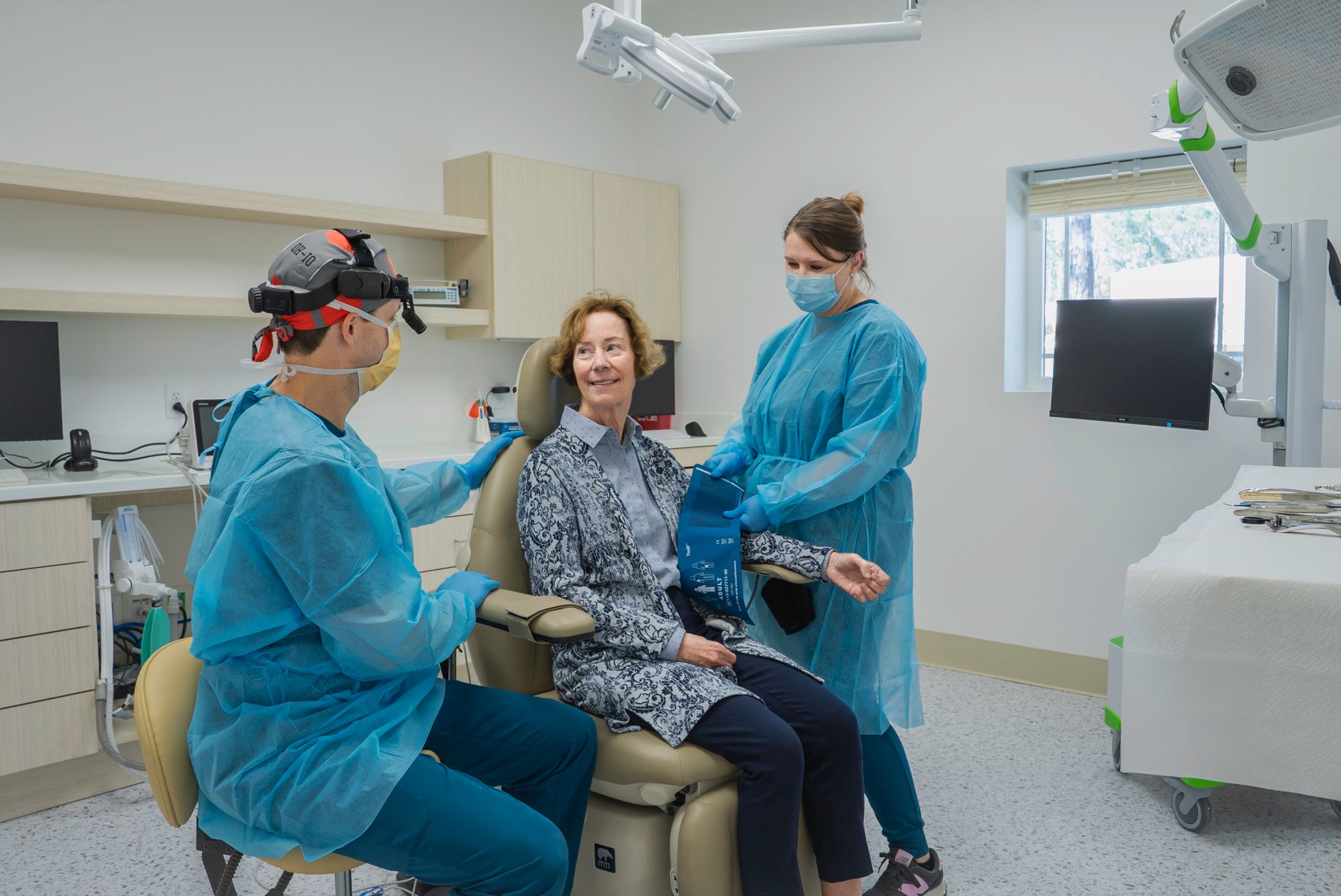
Before anything else, you sit down with your implant dentist for a full evaluation. At East Madison Dental, Dr. Narpat Jain, DMD, co-owner of the practice, works with patients across all three Bergen County locations on exactly this kind of planning. The consultation includes a review of your dental and medical history, a clinical exam, and detailed imaging so the team can assess bone volume, anatomy, and what approach makes the most sense for your mouth.
This is also your opportunity to ask everything. No question is too basic.
Step 2: Treatment Planning
All-on-4 is not a procedure you schedule on a Tuesday and show up for on a Wednesday. The placement of four implants in precise positions requires careful mapping. Your team will develop a plan that accounts for your specific bone structure, bite, and aesthetic goals.
Step 3: The Surgical Appointment
On the day of surgery, any remaining teeth in the arch are removed if needed, the four implants are placed, and a temporary fixed arch is attached. You leave with teeth. That's the part that earns the "teeth in a day" description, and it's accurate, but the word "temporary" matters here. The final restoration comes later.
You'll be given instructions for the recovery period, what to eat, how to care for the temporary arch, and what to expect as things heal.
Step 4: Healing and Osseointegration
Over the next several months, the implants fuse with the jawbone. This process is what makes the whole thing work. The bone grows around the implant surface and locks it in place. It takes time and cannot be rushed.
Step 5: The Final Restoration
Once healing is complete and the implants are fully integrated, the temporary arch is replaced with your permanent, final restoration. This is the set of teeth you'll have long-term, designed to fit your bite, your face, and your life.
What Recovery Is Actually Like
The first few days after surgery are the most significant. Most patients experience:
Swelling and some discomfort, managed with prescribed or recommended medication
A soft-food diet for a period of time, as directed by your care team
Specific oral hygiene instructions to protect the implant sites
Follow-up appointments to monitor healing
Most people are surprised by how manageable it is. That doesn't mean it's nothing. It means that with the right preparation and support, the recovery is something most patients move through without major disruption.
The Long View
All-on-4 dental implants are a long-term investment, in function, in confidence, and in bone health. Because the implants interact with the jaw the way natural tooth roots do, they help preserve the bone structure that removable dentures cannot.
Patients who've lived with ill-fitting dentures or significant tooth loss often describe the change as more than physical. Eating without thinking about it. Smiling without covering their mouth. Saying yes to things they'd quietly started avoiding.
If you're wondering whether All-on-4 might be right for you, the first step is a conversation. East Madison Dental sees patients across its Tenafly, Englewood, and Dumont locations. Call us at (201) 501-8282 or visit emdental.com to schedule a consultation.
Comments