
What Nobody Tells You About Getting Dental Implants (Until You're Already in the Chair)
The Dental Implant Process, Explained Like a Human Being
Most people who come to us asking about dental implants have already done some research. They've read the articles, skimmed the before-and-after photos, and still walked away with the same unanswered question: but what does it actually feel like to go through this?
Fair question. The dental implant process has a reputation for being long and complicated, and honestly, that reputation isn't entirely wrong. It does take time. But it's also one of the most predictable, well-established procedures in modern dentistry, and when you understand what's happening at each step, the whole thing gets a lot less intimidating.
Here's the real walkthrough.
It Starts Long Before Anyone Picks Up a Tool
The first visit is a conversation, not a procedure. Before anything else, we need to understand your specific situation: which tooth is missing, how long it's been gone, and what the bone in that area looks like now.
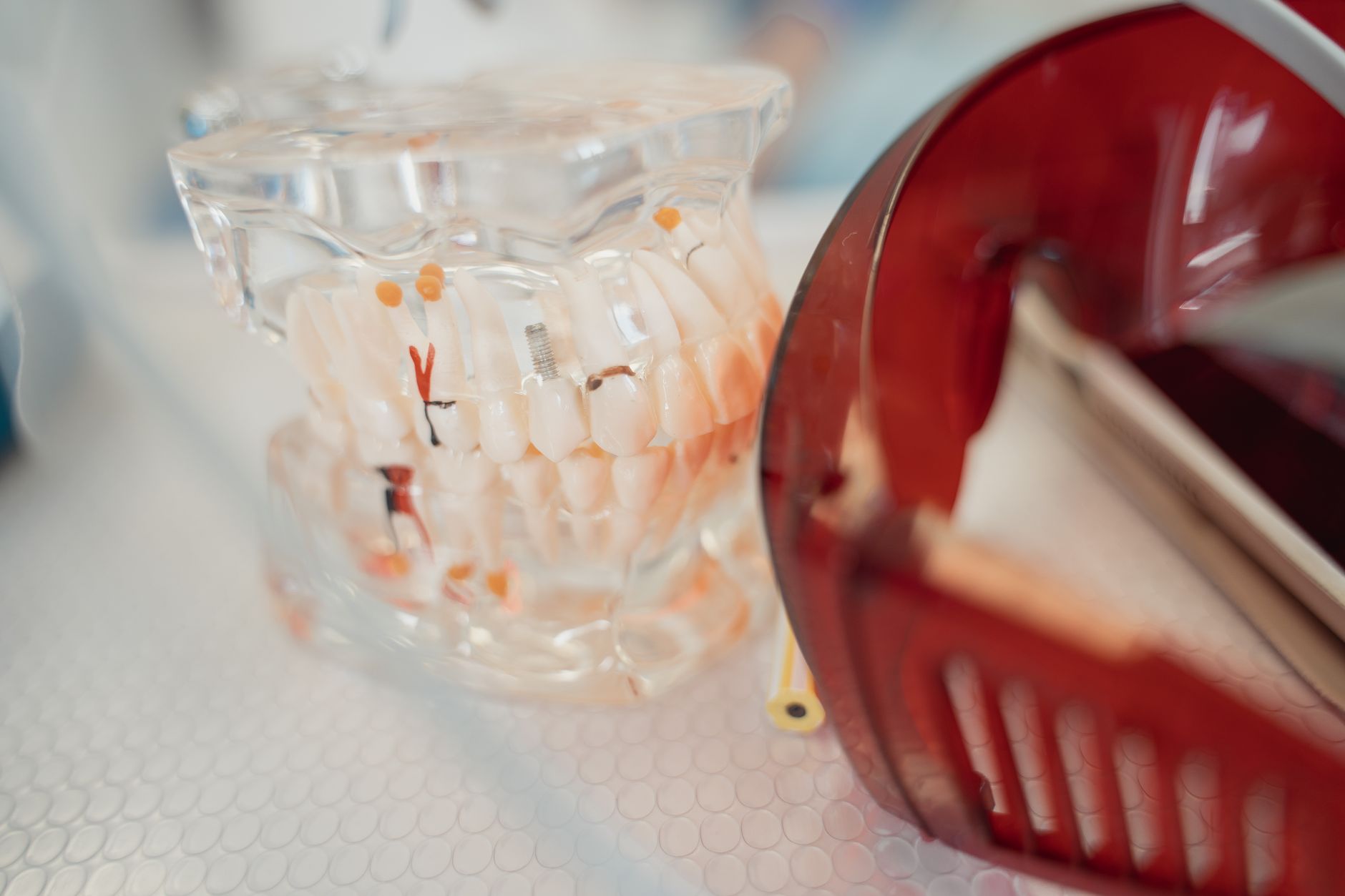
That last part matters more than most people expect. An implant is essentially a small titanium post that gets placed into your jawbone and eventually acts as the root of your new tooth. For that to work, there needs to be enough healthy bone in place to hold it. A 3D scan tells us exactly what we're working with.
From that first conversation, we build a plan that's specific to you. There's no universal dental implant timeline because every patient is different. Some people are ready to move forward quickly. Others need a little preparation first. Either way, you'll know exactly what to expect before anything moves forward.
What the Placement Actually Feels Like
This is the part people are most anxious about, so let's be direct: the placement itself is done under local anesthesia, and most patients are genuinely surprised by how little they feel during the procedure.
Afterward is a different story. The first few days typically involve:
Some swelling and tenderness around the site
Mild discomfort that most patients manage with over-the-counter pain relief
A soft-food diet while the area settles
Minor bruising in some cases, especially in the days right after
None of it is fun, but it's also nothing most people would describe as severe. The recovery after implant placement is usually more manageable than patients expect coming in.
The Part That Takes the Longest (And Why It's Worth It)
After the implant post is placed, there's a healing period while the bone grows around it and integrates with the titanium. This process is called osseointegration, and it's the reason dental implants are so stable once they're fully healed. The body is essentially accepting the post as part of its own structure.
This healing phase typically takes a few months. That's the part that feels slow. But it's also the part that makes everything else possible. Rushing it isn't an option if you want the result to last.
Once healing is confirmed, an abutment is attached to the implant post, and then your final crown is placed on top. At that point, you have a tooth that looks, feels, and functions like the one that was there before.
Why Patients Are Often Surprised by the End Result
The thing patients consistently tell us after completing the process is that they forget it's there. Not in a dismissive way. In the best possible way. The crown is matched to the color and shape of your surrounding teeth, and because the implant is anchored in the bone just like a natural root, it doesn't shift, click, or require any special maintenance beyond regular brushing and flossing.
For Dr. Narpat Jain, DMD, co-owner of East Madison Dental who practices cosmetic, implant, and general dentistry across all three of our locations, that outcome is the whole point. A replacement tooth that genuinely functions and looks like a natural one isn't just a cosmetic result. It protects the health of the surrounding teeth and the bone structure underneath.
Common Questions We Hear
How long does the full process take? For most patients, somewhere between three and six months from placement to final crown, though this varies based on healing time and whether any preparation was needed beforehand.
Can I get an implant if I've had the tooth missing for a long time? Sometimes, yes. Sometimes the bone loss from a long-term gap requires additional steps first. A scan and consultation will tell us what's realistic.
What if I'm nervous about the procedure? We offer sedation options for patients who want them. You don't have to white-knuckle your way through anything.
Do implants work for multiple missing teeth? Yes. Implants can support a single crown, a bridge, or a full-arch restoration, depending on what you need.
Ready to Find Out If You're a Candidate?
The best way to know whether dental implants are right for you is to come in and let us take a look. Families across Bergen County have been trusting East Madison Dental with questions like this since 1997, and our teams at our Tenafly, Englewood, and Dumont locations are ready to give you a real answer, not a sales pitch.
Call us at (201) 501-8282 or visit emdental.com to schedule your consultation.
Comments